
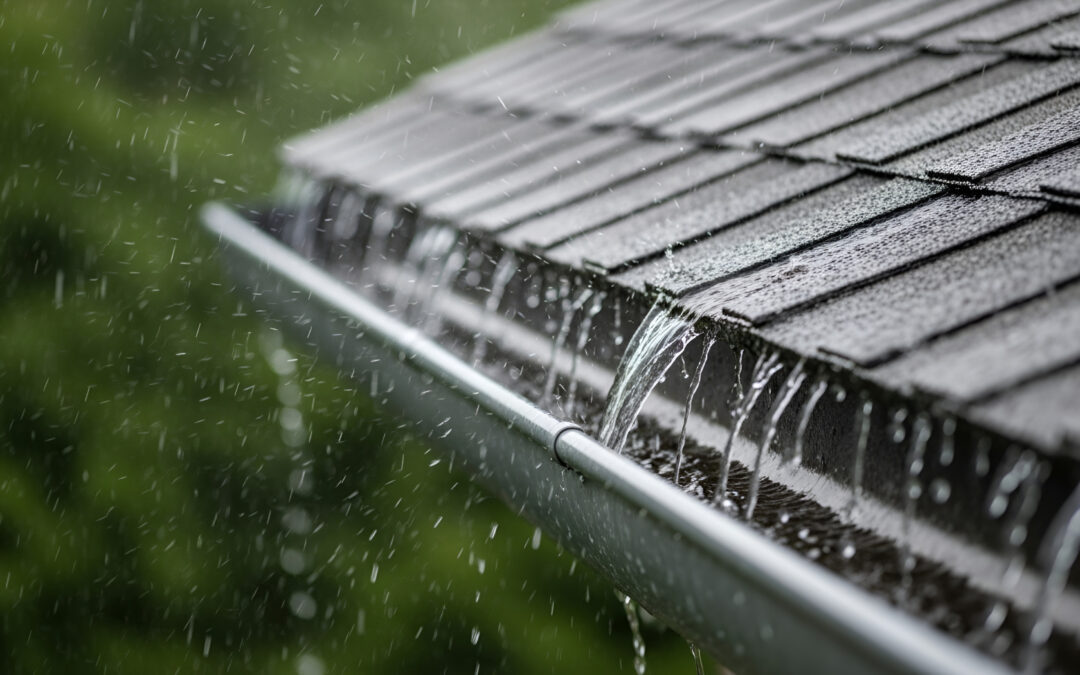
Why gutters overflow after winter in the Treasure Valley
In Boise, gutter overflow tends to show up when spring rain stacks on top of snowmelt and saturated soil. Homeowners often notice water spilling over the front edge, a “waterfall” at a corner, or pooling near the foundation—sometimes for the first time. The good news: most overflow problems come from a short list of causes, and the right fix is usually straightforward once you identify where the water is getting bottlenecked.
What “gutter overflow” usually means
Overflow isn’t just an inconvenience. When water can’t travel through the gutter system fast enough, it spills where gravity takes it—often onto fascia boards, siding, window trim, and the soil around your home. Over time, that can contribute to erosion, staining, wood rot, and water intrusion risk at basements/crawl spaces.
Quick symptom guide:
- Overflow along an entire run: capacity, pitch, or roof-edge/drip-edge issue.
- Overflow at one corner/end: downspout restriction, wrong pitch, or a low spot.
- Overflow behind the gutter (against fascia): missing/failed drip edge or wrong installation at the roof edge.
- Overflow only during “gusher” storms: roof valleys, undersized gutters/downspouts, or too few downspouts.
Top gutter overflow causes in Boise homes
1) Debris clogs (gutters or downspouts)
Pine needles, roof grit, seed pods, and shingle granules commonly collect in elbows and at downspout outlets. Even if the gutter “looks” clear from the ground, a partial blockage can cut flow dramatically and cause spillover at the nearest low point.
2) Improper pitch (too flat or pitched the wrong direction)
Gutters need consistent slope toward the downspouts. If a section is flat, back-pitched, or “bellied” (sagging), water pools and then overflows—especially when Boise’s spring runoff hits hard and fast.
3) Too few downspouts (or poor downspout placement)
You can have “clean gutters” and still overflow if water can’t exit quickly enough. Long runs with limited downspouts are especially prone to backup during heavy rain or rapid snowmelt.
4) Undersized gutters (capacity mismatch)
Certain roof designs move a lot of water into a short section of gutter—roof valleys are the classic example. If your home has steep pitches, wide roof planes, or big valley “dump zones,” a standard setup may be overwhelmed even when everything is clean and properly sloped.
5) Roof-edge/drip-edge problems (water goes behind the gutter)
If water is slipping behind the gutter, the issue may not be “overflow” at all—water can be bypassing the gutter line. A missing, damaged, or improperly integrated drip edge can send water behind the fascia, where it’s harder to spot until staining or wood damage appears.
6) Winter ice and freeze-thaw damage
Boise’s winter can leave behind loosened hangers, slightly separated seams, or a subtle pitch change that only shows up when the spring flow starts. If overflow appeared “suddenly” after winter, it’s worth checking for sagging sections, separated end caps, or downspouts knocked out of alignment.
Quick comparison table: what to check first
| What you see | Most likely cause | Fast homeowner check | Typical professional fix |
| Waterfalls at one corner | Downspout clog or underground drain backup | Check bottom elbow/outlet for debris; look for pooling at the downspout base | Downspout clear-out; add cleanout; correct discharge path |
| Overflow along a long section | Pitch issues, capacity, or too few downspouts | During light rain, see if water “sits” in the gutter after the storm | Re-hang/re-pitch; add downspouts; evaluate 5″ vs 6″ sizing |
| Water behind gutter / fascia staining | Drip-edge/roof-edge integration problem | Look for drip edge and check if water tracks behind during rain | Adjust/replace drip edge; install gutter apron; reset gutter position |
| Overflow only at roof valleys | High-volume surge dumping into one spot | Note if overflow aligns with valley line above | Add downspout; increase gutter size; add splash/deflector as needed |
Note: If you have underground drains tied into downspouts, a clog downstream can look exactly like a gutter problem. Water backs up, fills the gutter, then spills at the nearest edge.
Did you know? (Fast facts Boise homeowners can use)
A “clean-looking” gutter can still overflow if the downspout outlet is partially blocked or the run is back-pitched.
Roof valleys concentrate runoff—they can dump high volumes into a short gutter segment during intense rain or quick thaw.
Freeze-thaw can change alignment enough to create a low spot that only shows up once heavy spring flow returns.
Step-by-step: how to troubleshoot gutter overflow safely
Safety first: Ladder work is a top cause of home injuries. If you’re not comfortable, skip the ladder and call a pro—especially in early spring when surfaces can still be slick.
1) Confirm where the overflow starts
During a moderate rain (or with a garden hose), watch the first spot that spills. Start at corners, then roof valleys, then mid-run low spots.
2) Check downspouts before reworking the gutter line
If the gutter fills up but the downspout isn’t moving water, the “fix” is usually in the downspout, the elbow, or the drain outlet. Look for splash marks and pooling at the bottom—those are strong clues that water can’t exit fast enough.
3) Look for pitch and sagging
After rainfall, a properly sloped gutter should drain and not hold standing water. Persistent puddles point to a low spot (often caused by loose hangers, heavy debris/ice history, or settling).
4) Inspect the roof edge (behind-the-gutter leaks)
If the fascia is wet while the gutter isn’t full, the water may be slipping behind the gutter. That calls for a roof-edge solution (drip edge/gutter apron alignment), not just cleaning.
Boise-specific advice: spring runoff, soil, and where the water goes next
In Boise neighborhoods, spring melt and rain can saturate the ground quickly. When downspouts discharge right next to the foundation—or when extensions are missing—overflow and “too much water in one place” can show up as muddy trenches, splashback on siding, or damp crawl space odors.
Local best practices:
- Ensure downspouts discharge away from the foundation (and not onto walkways that refreeze).
- Pay special attention to north-facing roof edges, where snow and ice linger longer.
- If you have buried drains, add a cleanout point so blockages can be cleared without guesswork.
Want to see what well-installed gutters, guards, and shade systems look like on Boise-area homes? Browse our project photos in the Gallery.
Get a clear answer fast: repair, re-pitch, add downspouts, or upgrade
If your gutters are overflowing in Boise, the smartest next step is a quick evaluation of flow, pitch, and downspout performance—before fascia, landscaping, or foundation areas take repeated soaking. Idaho Gutter & Shade Solutions offers free estimates and practical options ranging from cleaning and repairs to seamless gutter upgrades and gutter guard solutions.
Prefer to plan ahead? Ask about low-maintenance upgrades like gutter guards and seamless gutter improvements.
FAQ: Gutter overflow causes (Boise, ID)
Why do my gutters overflow when they look clean?
The most common reasons are a partially blocked downspout, a sag/low spot holding water, or a capacity issue at a roof valley. Clean-looking gutters can still have restrictions at the outlet or elbows.
Is gutter overflow an emergency?
One storm usually isn’t catastrophic, but repeated overflow in the same place can quickly lead to fascia rot, stained siding, and soil erosion near the foundation. If you’re seeing pooling against the house, it’s worth addressing promptly.
What if the overflow happens only during heavy rain?
That often points to capacity: undersized gutters, too few downspouts, or a roof valley sending a surge into one area. A professional can evaluate whether adding a downspout or upgrading gutter size will solve it.
Can gutter guards stop overflow?
Guards can reduce debris buildup and help prevent clogs, which are a major overflow trigger. However, they won’t fix a wrong pitch, too few downspouts, or water running behind the gutter—those need installation or drainage corrections.
How often should Boise homeowners clean gutters?
Most homes benefit from at least a fall cleaning (before winter) and a spring check (after winter). If you have pine trees or heavy roof debris, you may need more frequent service—or a guard system designed for your roof and debris type.
If you’d like help choosing between cleaning, repair, guards, or a seamless gutter upgrade, schedule a visit here: Contact Idaho Gutter & Shade Solutions.
Glossary (helpful terms)
Downspout: The vertical pipe that carries water from the gutter to the ground or a drain line.
Pitch (slope): The slight angle a gutter needs so water flows toward the downspout rather than sitting in the trough.
Roof valley: The inside angle where two roof planes meet; it concentrates runoff and can “dump” high volumes into a small gutter area.
Drip edge: Metal edging at the roof perimeter designed to guide water into the gutter and protect roof edges and fascia.
Fascia: The board behind the gutter at the roof edge. Chronic overflow (especially behind the gutter) can lead to staining and rot.
Considering an upgrade for fewer cleanouts and more reliable flow? Read about gutter guard benefits and warranty details.
