
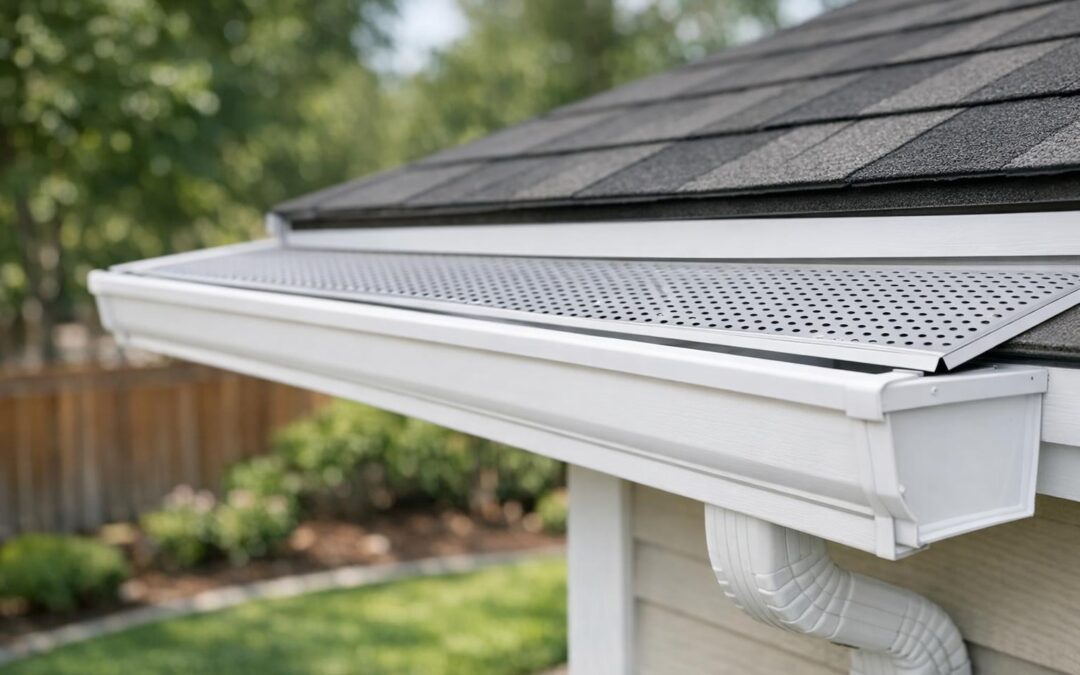
A Boise-friendly decision guide for fewer clogs, less overflow, and longer gutter life
Boise weather can shift quickly—spring rain stacked on snowmelt, windy days, and freeze-thaw cycles that stress roofs and drainage. When gutters can’t move water fast enough, overflow can show up at the fascia, landscaping, walkways, and even near the foundation. Boise homeowners often ask the same question: should you keep scheduling cleanings, or invest in gutter guards and be done with it?
Below is a practical, no-hype breakdown from Idaho Gutter & Shade Solutions to help you choose the best fit for your home, your trees, and your tolerance for ladder time—plus a Boise-specific checklist to reduce overflow and winter issues.
Focus keyword
gutter cleaning vs gutter guards boise
Why this question matters more in Boise than you might expect
Gutters don’t fail in dramatic ways at first. It’s usually subtle: a small waterfall at one corner, a damp stripe on siding, or puddling that shows up after a fast-moving storm. In Boise, overflow is commonly tied to a few repeat culprits: debris buildup, improper slope, undersized downspouts, and winter freeze-thaw wear that changes how water moves through the system. Boise homeowners also see overflow when spring rain overlaps with melting snow and saturated ground, which increases the “penalty” for slow drainage.
Quick reality check: If water is spilling over the front edge, the solution isn’t always “clean the gutters.” Sometimes the fix is better water capture (guards), better flow (slope/downspouts), or better roof-to-gutter handoff (drip edge and flashing details).
Option 1: Routine gutter cleaning (what it solves—and what it doesn’t)
Gutter cleaning is the traditional approach: remove leaves, needles, roof grit, shingle granules, and roof moss; then flush downspouts and check for standing water. If your home has minimal tree cover, a straightforward roofline, and you don’t mind seasonal maintenance, cleaning can be a perfectly reasonable plan.
Cleaning is usually a good fit when:
• You have few trees nearby and debris is light.
• You’re comfortable with 1–3 cleanings per year (depending on debris load).
• Your gutters already drain well and you mainly need “reset” maintenance.
• You want the lowest upfront cost and prefer pay-as-you-go service.
Where cleaning alone can fall short:
• Debris returns quickly (pine needles and small seeds can be relentless).
• If slope or downspout capacity is off, clean gutters can still overflow.
• Ladder access and second-story rooflines add risk and hassle—especially during hot summer afternoons or shoulder-season wind.
Option 2: Gutter guards (what “works” actually means)
Gutter guards aren’t magic covers that eliminate maintenance forever. Good systems are designed to reduce clogs, improve water intake during normal rainfall, and cut down on cleanouts—not to remove the need for periodic checks. Many homeowners choose guards because they want convenience and durability (especially if they already invested in outdoor upgrades and prefer a “set it and forget it” lifestyle).
Micro-mesh styles are widely discussed for filtering small debris while still allowing water to enter through tiny openings (often described in the 30–50 micron range), which can be helpful when the problem is fine debris rather than big leaves.
What to expect with quality gutter guards
• Fewer clogs and fewer full cleanouts (especially where needles or small debris are the main issue).
• Less standing water caused by debris dams—when paired with proper slope and downspout sizing.
• Seasonal “checkups” still matter: valleys, downspout outlets, and roof edge details can still create trouble spots.
• In winter climates, performance depends on roof heat loss, insulation/venting, and how snow/ice sits along the roof edge—not just the guard itself.
Boise decision table: Cleaning vs. guards
Factor
Routine Cleaning
Gutter Guards
Upfront cost
Lower
Higher (investment)
Ongoing effort
Higher (repeat visits or DIY)
Lower (periodic checks/spot cleaning)
Best for tree debris
Light to moderate debris
Moderate to heavy debris (depending on guard type)
Overflow prevention
Good if clogs are the only issue
Very good when paired with correct slope/downspouts and proper roof-edge details
Winter/freeze-thaw
Open gutters can ice if water sits; maintenance timing matters
Guard choice and roof conditions matter; still needs inspection in cold snaps
Who it’s best for
Homeowners who don’t mind seasonal upkeep
Homeowners prioritizing convenience, durability, and fewer service calls
Tip: If your “gutter problem” is really a roof valley dumping water too fast or a downspout bottleneck, guards alone won’t solve it. That’s why a quick on-site assessment is worth it before you commit either way.
A Boise homeowner’s checklist: choose the right fix (not just the popular one)
Use this checklist to identify what’s actually happening at your home:
If you see this…
Water spilling over the front edge during normal rain
Most often: debris dams, poor pitch, or undersized/outlet-restricted downspouts. Cleaning helps if debris is the cause; guards help prevent repeats.
Overflow at one corner only
Often: a slope issue, a localized clog, or a valley dumping too much water at one spot. This is where professional adjustments (re-sloping, outlet changes, splash guards) matter.
Gutters holding standing water after a storm
Often: pitch problems or a downspout restriction. Standing water accelerates corrosion and makes freezing more likely in cold snaps.
Icicles and edge ice every winter
Often: heat loss from the home (attic insulation/venting) plus freeze-thaw. Guards are not a universal “ice fix,” but correct drainage details reduce how long water sits at the edge.
Local angle: what Boise homes should prioritize
Boise homes often deal with a mix of wind, seasonal debris, and shoulder-season storms. If you’re actively using your patio in peak summer (especially with retractable shade and screens), the last thing you want is water cascading near entryways or creating muddy splash zones that get tracked inside.
Boise-smart priorities
• Plan for spring overlap: rain + meltwater means gutters must drain fast.
• Reduce ladder time during windy shoulder seasons with a maintenance-light system (guards + annual inspection).
• Keep water away from outdoor living zones: downspout placement and extensions can matter as much as the gutter itself.
• If you’ve invested in comfort upgrades (awnings, pergolas, screens), treat gutters as part of the same “protect the exterior” strategy—water management preserves paint, trim, patios, and landscaping.
Want to see what a clean install looks like? Browse the project gallery for examples of gutters and outdoor living enhancements completed around Boise.
A practical recommendation (based on how you use your home)
If your priority is convenience, automation, and durability, gutter guards are often the better long-term match—especially on multi-story sections, steep rooflines, or homes with consistent fine debris. If your priority is lowest upfront spend and you’re okay scheduling seasonal service, cleaning can make sense, particularly when debris is light and access is easy.
Either way, the biggest “win” is pairing the choice with a quick system check: correct pitch, properly sized downspouts, secure hangers, and clean outlets. That’s how you avoid the frustrating scenario of “we cleaned it and it still overflows.”
Related upgrades that pair well with better drainage
• Gutter installation & repair when slope, seams, or sizing are the real issue
• Gutter guards to reduce clogs and cut down on cleanouts
• If summer comfort is part of the goal, explore retractable awnings or retractable screens to keep outdoor spaces usable when conditions change
Get a Boise-specific recommendation (cleaning schedule vs. guards)
If you’re seeing overflow, staining, or frequent clogs, a quick assessment can usually pinpoint whether you need a cleaning plan, gutter guards, re-sloping, or a targeted repair. We’ll help you choose the option that fits your home—not a one-size-fits-all pitch.
Prefer to browse first? See local work in the photo gallery.
FAQ: Gutter cleaning vs. gutter guards in Boise
How often do Boise gutters typically need cleaning?
It depends on tree cover and roof layout. Many homes do well with seasonal cleanings (often spring and fall), while homes under heavier debris may need additional mid-season service—especially if valleys funnel material into one section.
Do gutter guards eliminate maintenance completely?
No. They typically reduce the frequency and intensity of cleanouts, but periodic checks still matter—particularly at roof valleys, downspout outlets, and after windstorms.
If my gutters overflow during heavy rain, does that mean guards won’t work?
Not necessarily. Overflow during heavy rain can indicate a capacity or flow issue (pitch, downspouts, or a valley dumping too much water). A properly designed system can reduce overflow risk, but the best approach is to diagnose the real cause first.
Are gutter guards a good idea with Boise winters?
They can be, but winter performance depends on the full roof-edge system and the home’s insulation/ventilation. Freeze-thaw cycles and roof heat loss are common drivers of edge ice. The most reliable strategy is good drainage plus addressing any roof/attic contributors.
What’s the best first step if I’m not sure which route to take?
Start with an on-site look at pitch, downspout flow, and where debris collects. From there, it’s easy to decide whether a cleaning plan is enough or whether guards/repairs will save you time and prevent recurring overflow.
Glossary
Downspout
The vertical pipe that carries water from the gutter down to the ground and away from the home.
Pitch (Slope)
The slight angle that directs water toward the downspout. Incorrect pitch can cause standing water and overflow.
Roof Valley
Where two roof planes meet. Valleys can dump high volumes of water into one gutter section, creating overflow if that area isn’t configured correctly.
Gutter Guard (Protection System)
A cover or filter system installed over gutters to reduce debris entry and help prevent clogs. Designs vary; performance depends on the type and the home’s roof/drainage setup.
