
A practical checklist for proactive Boise homeowners
Boise’s early fall is one of the best times to enjoy the patio—right up until the first round of gusty storms and the steady drop of leaves and debris. If your awning is still out when the wind picks up, or your gutters are already partially clogged when the rains start, you can end up with bent awning components, overflowing gutters, and water pooling where you don’t want it. This guide breaks down what to do before fall weather swings—so your home stays protected and your outdoor space stays usable.
Primary homeowner concern in Boise each fall: wind + debris. Wind threatens retractable awnings (especially if unattended), while leaves and roof grit quickly form clogs in gutters and downspouts. A coordinated “awning + gutter” tune-up is the fastest way to reduce storm-related surprises.
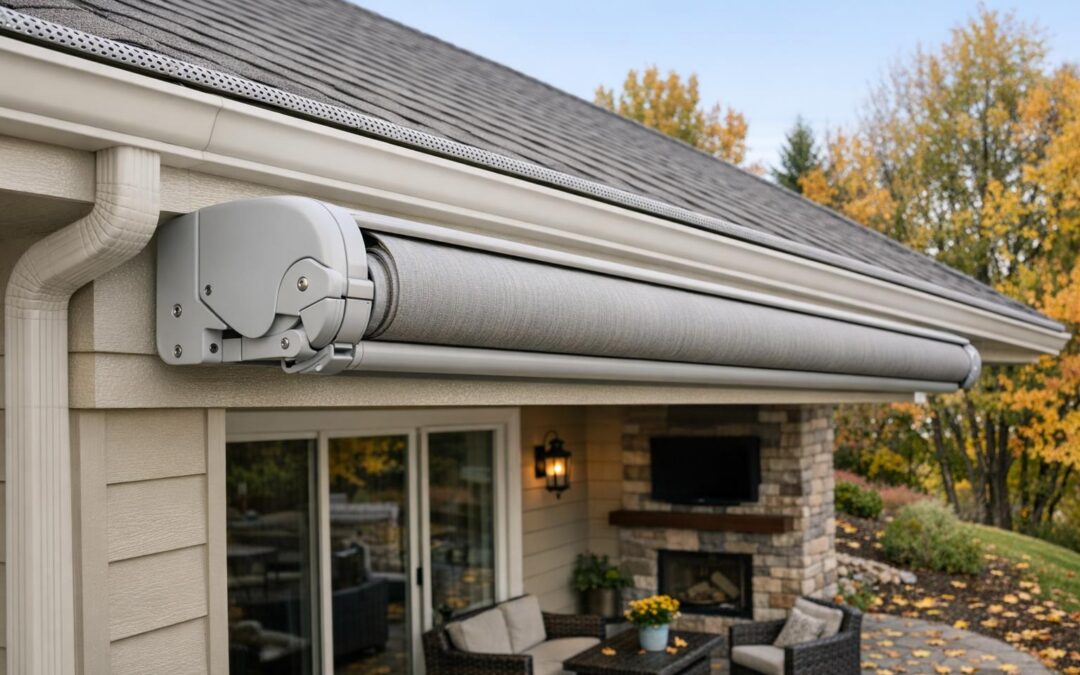
1) Retractable awnings and fall wind: what “safe” really means
Awnings are built for sun and light weather—not for unpredictable gusts. Many manufacturers and installers reference wind classifications (often tied to the Beaufort scale) and recommend retracting when winds rise into the moderate range. As a rule of thumb, many sources advise retracting in winds around 20–25 mph to avoid damage—especially when gusts are building or storms are forecasted.
- Retract early if wind is building—don’t wait for the “big gust.”
- Retract when you leave home (even if you have a wind sensor). Sensors are helpful, but they’re a backup—not a guarantee.
- Watch for visual cues: fabric billowing, arms creaking, or your patio umbrella feeling hard to control.
Also note: some higher-end systems may be rated for higher speeds, but the most reliable strategy in Boise’s variable fall weather is still the same—use the shade when conditions are calm, retract when conditions shift.
2) Fall gutter readiness: the “overflow prevention” checklist
Clogged gutters don’t just cause annoying drips—they can drive water behind fascia, overflow onto walkways, and increase the chances of foundation and landscaping problems. Fall is when gutters get stressed: leaf drop begins, roof granules and debris collect, and the first rains test your system’s capacity.
| Check | What you’re looking for | Why it matters in fall |
|---|---|---|
| Gutter trough debris | Leaf mats, shingle grit, seed pods, pine needles | Debris forms “dams” that cause overflow at corners and valleys |
| Downspouts | Slow draining, gurgling, clogs at elbows | A clear gutter can still overflow if the downspout is restricted |
| Slope & hangers | Standing water, sagging sections, loose fasteners | Extra water weight + debris accelerates sagging and spillover |
| Discharge direction | Downspouts dumping near the foundation | Helps reduce water pooling, seepage risk, and slick walkways |
| Ground grading near home | Soil sloping toward the house | Codes commonly call for grade to slope away from the foundation (where feasible) |
Note on gutter guards: gutter protection systems can dramatically reduce clogs and cleanouts, but no system is truly “set it and forget it.” A smart fall plan still includes periodic inspection—especially after wind events.
Quick “Did you know?” facts (Boise fall edition)
3) A coordinated prep plan: awnings, pergolas, screens, and gutters
- Remove debris from troughs and inside corners
- Flush downspouts to confirm full flow
- Look for sagging, separation at seams, and leaking end caps
- Retract when leaving the house (even for errands)
- Retract before forecasted storms
- If you use a wind sensor, set a conservative threshold and treat it as backup
- Power screens: keep tracks clear of leaf litter so screens don’t bind
- Motorized louvered pergolas: verify drainage paths are clear and operate smoothly
- Patio awnings: check pitch and hardware tightness before the windy season
Want to see what well-installed gutters, awnings, pergolas, and screens look like on real Boise-area homes? Browse our project photos here: Gutter & Awning Installation Gallery.
4) Local Boise angle: timing your prep for the Treasure Valley
In Boise, the “sweet spot” for fall prep is typically late summer through early-to-mid fall—before leaf drop peaks and before the first stretch of wet, windy days. If your property has mature trees (or you’re downwind from them), you may need more than one gutter cleanout during the season.
If you’ve ever seen a fast-moving gust front roll through the valley, you already know why retractable awnings and screens benefit from a “retract early” routine. The goal isn’t to guess the exact wind speed—it’s to avoid getting caught with shade extended when the weather turns.
Need help getting your gutters and outdoor shade ready for fall?
Idaho Gutter & Shade Solutions can inspect, repair, and upgrade gutters and gutter protection, and help you protect outdoor living features like retractable awnings, patio awnings, power screens, and motorized louvered pergolas.
FAQ: Fall gutters & awning wind safety in Boise
Glossary (helpful fall prep terms)
Ready for a professional set of eyes before Boise fall storms arrive? Contact us here: Schedule an estimate with Idaho Gutter & Shade Solutions.
