
Your gutters have one job—move water away from your home. Fall is when that job gets hardest.
In Boise, fall leaf drop can happen in waves (not all at once), which is why many homeowners get surprised by sudden overflow even after a “recent” cleanout. When gutters and downspouts clog, water can spill over the edge, soak fascia and siding, erode landscaping, and pool near the foundation. A smart fall plan is simple: clean, inspect, test flow, and fix small issues before colder weather makes problems harder (and riskier) to address.
Why fall prep matters for Boise homes
Fall is peak debris season—leaves, pine needles, seed pods, and roof grit can build up quickly. Many maintenance guides recommend cleaning gutters at least twice per year (spring and fall), and homes with lots of trees may need additional cleanouts to keep downspouts flowing freely.
Another Boise-specific reason to stay ahead: when temperatures drop, leftover wet debris can hold moisture, create heavy “sludge,” and contribute to winter problems like ice buildup and stress on hangers and fascia. Keeping the system clear before winter weather is one of the simplest ways to reduce the chance of damage.
Boise fall timing: when to clean (and when to re-check)
A practical schedule for many Boise neighborhoods is:
1) Early fall check (September–early October): quick inspection + remove early debris, especially pine needles and roof grit.
2) Main cleanout (mid-October–late November): clean after heavy leaf drop. In Boise, leaf cleanup often ramps up mid-October and can continue into late November.
3) Post-storm re-check: after a wind event, look for valleys and corners loading up with leaves again.
If your lot has mature deciduous trees (maples, oaks) or tall pines, plan on at least two fall touchpoints—one earlier and one after most leaves have dropped.
Quick “Did you know?” gutter facts
Leaves don’t clog evenly. Most blockages form at roof valleys, behind inside corners, and at downspout outlets.
Downspouts are the usual failure point. A gutter can look “mostly clear,” but one clogged downspout can still cause overflow at the worst spot.
Winter risk rises with debris left behind. Keeping gutters clear before freezing weather helps reduce conditions that contribute to ice-related issues along roof edges.
Fall gutter maintenance: a simple checklist (printable-style)
| Task | What to look for | Why it matters |
|---|---|---|
| Remove debris from gutters | Wet leaf mats, pine needles, shingle granules | Prevents overflow and standing water |
| Flush downspouts | Slow draining, gurgling, water backing up | A clear gutter still fails if the downspout is blocked |
| Check slope (pitch) | Standing water in long runs | Standing water increases corrosion and winter freeze risk |
| Inspect hangers & fascia line | Sagging sections, gaps at fascia, loose fasteners | Prevents spillover behind the gutter and structural strain |
| Seal leaks at joints/end caps | Drips or staining beneath seams | Stops water from rotting trim and staining siding |
| Confirm downspout discharge | Water dumping at the foundation, splashback | Reduces basement/crawlspace moisture and erosion |
Common Boise fall warning signs (don’t ignore these)
Overflow during light rain: usually a clog at an outlet or a low spot holding debris.
Water behind the gutter: can indicate a slope issue, loose hangers, or flashing problems.
Plants growing in the gutter: means standing water and decomposing organic matter—cleaning alone may not be enough if pitch is off.
Staining on siding or foundation splash marks: often points to overflow or poor downspout discharge placement.
Step-by-step: a safe, homeowner-friendly approach
1) Start with a ground-level scan
Walk your home perimeter and look for sections that sag, overflow stains, separated joints, or downspouts that dump water too close to the foundation.
2) Clear gutters—then clear outlets
Remove debris from the gutter trough first, then focus on the downspout outlets. Many “mystery overflows” come from compacted debris right at the outlet opening.
3) Flush the system and watch how it drains
Use a hose to run water toward each downspout. Slow draining signals a clog or an improper pitch. If water stands in long runs, the slope may need adjustment (re-sloping).
4) Know when to call a pro
If you have a steep roofline, two+ stories, complex valleys, or repeated overflow in the same spot, professional service is often the safest, fastest route—especially in late fall when ladders and surfaces can be slick.
Are gutter guards worth it for fall in Boise?
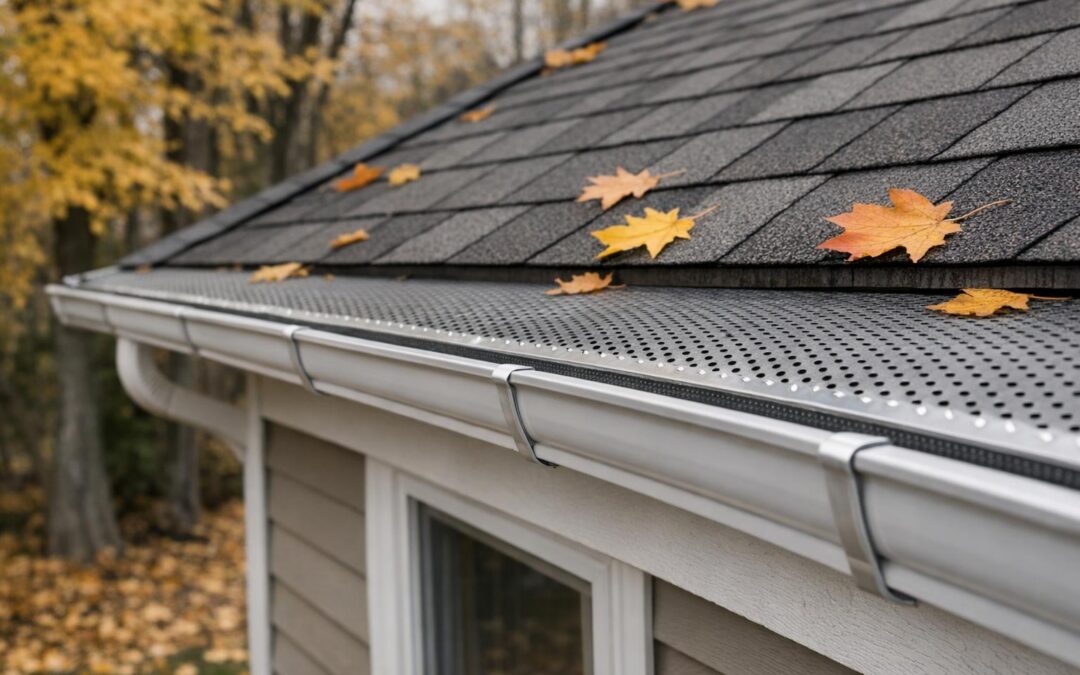
For homeowners surrounded by trees, gutter protection can dramatically cut down on ladder time and reduce clogs. The key is choosing a system that fits your roof, handles Boise debris (fine needles + leaf fragments), and is installed correctly so water doesn’t “overshoot” in heavier rain.
If you’re tired of cleaning twice each fall, ask about professional gutter guard options designed to keep debris out while maintaining reliable water flow.
Local angle: Boise neighborhoods, trees, and “micro-problems”
Boise has plenty of mature tree canopy in established neighborhoods—great for shade, tough on gutters. If your home is near cottonwoods, maples, oaks, or pines, expect a combination of big-leaf drop and fine debris that compacts easily. That compaction is what plugs elbows and downspout transitions.
A Boise-friendly strategy is to pair one thorough late-fall cleaning with targeted spot checks after windy days—especially at roof valleys, garage tie-ins, and any gutter run that serves a large roof area.
Want your gutters ready before the next leaf wave hits?
Idaho Gutter & Shade Solutions helps Boise homeowners with gutter cleaning support, re-sloping, repairs, seamless gutter installation, and gutter protection systems—so water goes where it’s supposed to go.
FAQ: Seasonal gutter maintenance in Boise
How often should I clean my gutters in the Boise fall season?
Many homes do well with a main cleanout after most leaves drop, plus one earlier check if you have heavy pine needles or lots of trees. If you’re still seeing overflow, your downspout may be partially blocked or your gutter slope may need adjustment.
What’s the #1 sign my downspout is clogged?
Overflow during moderate rain—especially right above a downspout outlet—often points to a blockage in the outlet or downspout elbow.
Do gutter guards eliminate cleaning?
They can reduce how often you need to clean, but most systems still benefit from periodic inspection—especially after windstorms—so water continues to flow properly.
Why does water spill behind the gutter instead of over the front edge?
Common causes include loose hangers, separated seams, improper pitch, or issues at the roof edge/flashing line. This is a high-priority fix because hidden water can damage fascia and soffits.
Can I wait until after the first freeze?
It’s better to clean and test flow before freezing temperatures. Wet debris gets heavier, surfaces get slick, and small issues can turn into larger repairs when winter weather arrives.
Glossary (quick definitions)
Downspout: The vertical pipe that carries water from the gutter to the ground (or drain connection).
Pitch (slope): The slight angle that helps water move through the gutter toward the downspout.
Fascia: The board along the roof edge where gutters are typically attached.
Overflow: Water spilling out of the gutter because of a clog, slope issue, or undersized/blocked downspout.
Gutter guards (gutter protection): A cover or screen system designed to reduce debris entering the gutter while still allowing water to flow in.
