
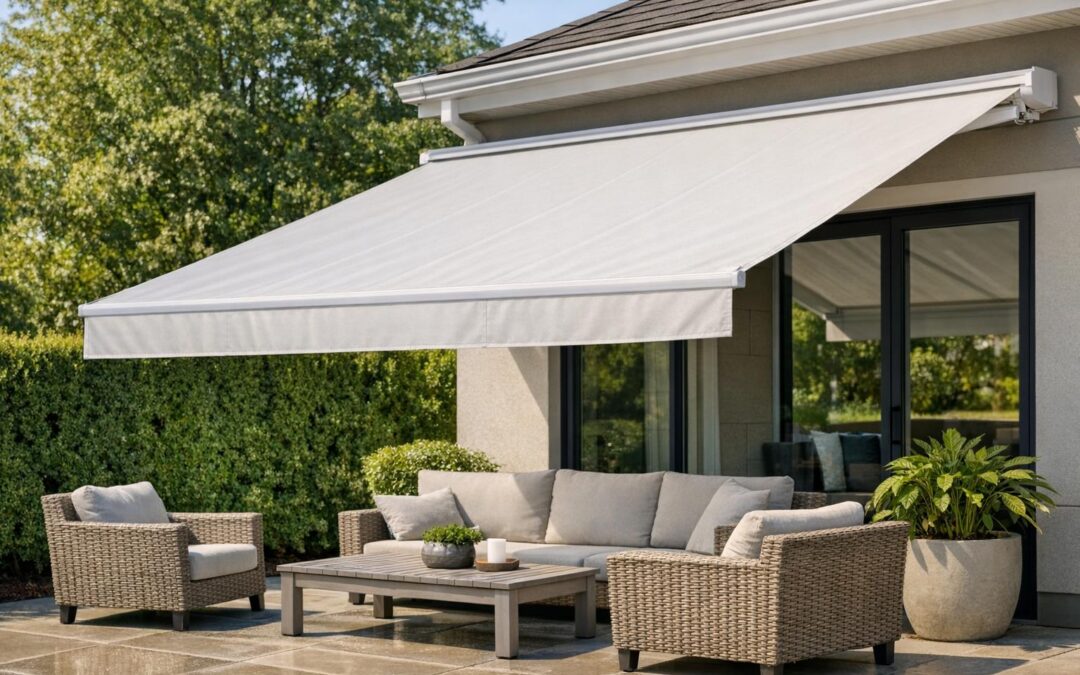
Keep your patio shaded—keep your awning clean, dry, and storm-ready
Boise summers are made for back patios—until a quick thunderstorm rolls through, the wind kicks up, and a damp awning gets retracted in a hurry. That “roll it up now, deal with it later” moment is one of the most common ways mildew and mold start on awning fabric. The good news: preventing mold is mostly about moisture control, airflow, and a few practical habits that fit real life. Below is a homeowner-friendly plan to protect your awning’s fabric, hardware, and finish—while keeping outdoor spaces comfortable all season.
Why awnings get moldy (even in a “dry” climate)
Mold and mildew need two main things: moisture and something to cling to. Awning fabric is often treated to resist mildew, but resistance isn’t the same as immunity. When dust, pollen, cottonwood fluff, or organic debris sits on fabric and then gets wet, it can create a thin “food layer” that supports growth—especially if the awning is stored damp.
Public health guidance is consistent on the key prevention principle: dry wet materials promptly—ideally within 24–48 hours—to stop mold from getting established. That moisture timeline matters for awnings too, because rolled fabric traps humidity where air can’t circulate.
Boise-specific risk factors to watch
If you retract fast to protect the frame (smart), you can accidentally store moisture against the fabric (not great). The goal is to retract for safety, then re-dry ASAP when conditions improve.
Heat bakes dust and pollen into the weave. When it later gets wet (sprinklers, rain, rinse), that grime can hold moisture longer—creating a better environment for mildew.
This is a quiet culprit. Your awning can be “wet every day” without a storm. If the fabric edge gets damp regularly and doesn’t fully dry, mildew spots often begin along hems and seams.
Step-by-step: prevent mold on an awning (Boise homeowner checklist)
1) Adopt the “dry-before-storage” rule (with a realistic backup plan)
Best practice is simple: let the fabric dry before retracting. If you must retract during rain (or high winds), extend it again at the first safe opportunity to dry completely. Many manufacturer care guides also warn against leaving fabric rolled up while wet for extended periods because trapped moisture encourages mildew.
2) Keep the fabric clean so it dries faster
Dirt holds water. A clean awning sheds moisture and dries more evenly. For routine upkeep:
3) Stop “hidden wetting” from sprinklers and gutters
If your awning is repeatedly getting splashed, it may never fully dry at the edges. Two common fixes:
Sprinkler adjustment: Re-aim heads and reduce overspray so the fabric and valance aren’t getting hit daily.
Water management check: Overflowing gutters or misdirected downspouts can soak patio areas and create constant splash-back. If you suspect that’s happening, your drainage system may need cleaning, re-sloping, or repair.
4) Use automation to protect fabric during wind—without trapping moisture
If you value convenience, consider motorized options and smart controls that help you retract quickly when wind picks up. The key is pairing that storm protection with a post-storm habit: re-extend to dry once conditions are safe. If you’re upgrading your outdoor comfort system, you can also consider solutions that provide shade and airflow with less fabric exposure.
Great for on-demand shade—just plan for drying time after storms or overspray.
Adjustable louvers can manage sun and light rain while maintaining airflow—less chance of storing damp fabric.
Keep bugs down and improve comfort so you can ventilate your patio space without leaving fabric shade deployed all day.
5) If you spot mildew, act quickly (and safely)
A few specks or a musty smell usually means moisture was trapped. First, correct the cause (stored wet, overspray, clogged gutters). Then clean using methods appropriate to your specific fabric. If you’re unsure, avoid aggressive chemicals that can discolor fabric or weaken stitching. General mold-prevention guidance emphasizes rapid drying and moisture control to prevent regrowth.
Quick comparison: habits that prevent awning mold
| What you do | Why it works | Boise homeowner tip |
|---|---|---|
| Dry before retracting (or re-extend ASAP) | Stops moisture from being trapped in rolled fabric | After a storm, open it the next clear window—even 30–60 minutes helps |
| Brush off debris regularly | Reduces grime that holds water and feeds mildew | Cottonwood season: do a quick sweep before it bakes into the fabric |
| Avoid pressure washing | Prevents coating and seam damage | Gentle clean + thorough rinse is safer and more consistent |
| Fix overspray and drainage issues | Prevents repeated wetting that never fully dries | Check downspout outlets and sprinkler arcs at the start of summer |
Local angle: protecting outdoor comfort in Boise neighborhoods
In Boise, outdoor living setups often include a mix of shade, screens, and water-management upgrades to keep patios usable through heat, smoke days, and sudden weather changes. Awnings and pergolas perform best when the surrounding systems support them—especially gutters and downspouts that move roof runoff away from patios and door thresholds.
If you’re noticing splash marks on your awning or recurring dampness near the mounting area, it may be time to look at the whole exterior “water path,” not just the fabric.
See real gutter and shade installs around Boise to compare styles and setups.
Gutter protection can help prevent the overflow and drip-lines that repeatedly wet patio areas.
Want your awning to last longer and work better in Boise weather?
If your awning is getting hit by overspray, seeing frequent wind events, or showing early mildew spots, a quick inspection and maintenance plan can prevent costly fabric replacement. Idaho Gutter & Shade Solutions can help you dial in shade, screens, pergolas, and drainage so your outdoor space stays comfortable with less upkeep.
